
Innovation from Hamburg: decareto awarded the BSFZ seal

decareto has been awarded the BSFZ seal for its in-house research and development projects. The award recognises the Hamburg-based company’s technological development from automated data protection audits to a platform for website compliance covering data protection and digital accessibility.
Political Party Websites Review 2026: Room for Improvement in Digital Accessibility and Data Protection
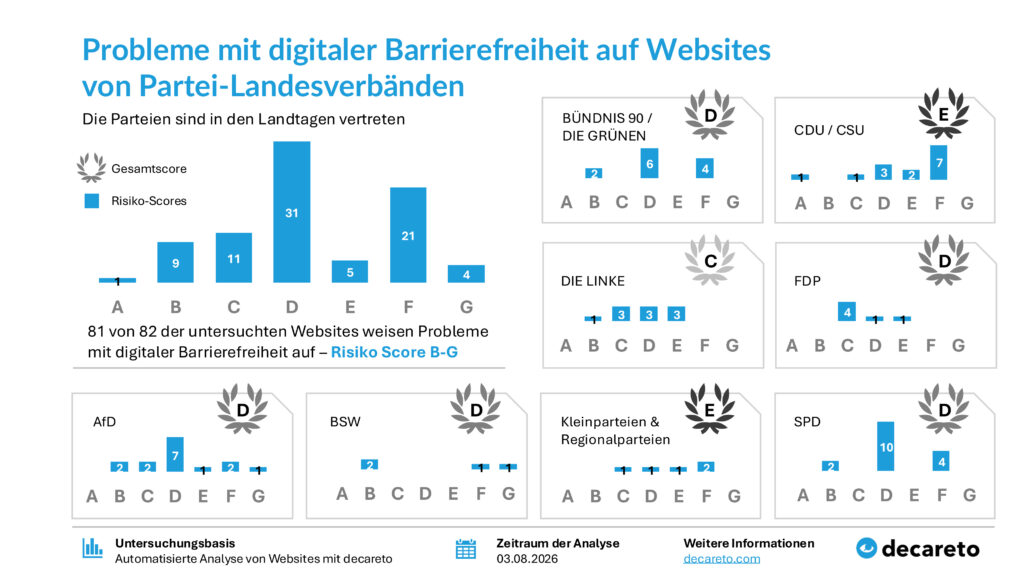
Political websites in Germany show significant room for improvement in digital accessibility and data protection. A recent decareto analysis of 82 websites operated by German political parties’ state-level organizations found automatically detectable accessibility issues on 99% of the websites examined. In addition, 78% showed potential data protection gaps or technical risk indicators. The findings highlight the growing importance of regular technical audits, manual accessibility testing, and privacy-conscious web design for political organizations.
Website Check 2026: GDPR Checklist for Websites

A GDPR-compliant website requires more than just a privacy policy. Website owners should ensure transparent data processing, obtain valid consent for non-essential cookies, secure personal data with SSL encryption, and comply with GDPR requirements when using contact forms, newsletters, analytics tools and third-party plug-ins. This GDPR website checklist covers the key measures businesses should review to reduce compliance risks and avoid potential fines or formal warnings.
The three fundamentals of keyboard accessibility

Keyboard accessibility is one of the most important fundamentals of digital accessibility and determines whether websites can be used fully without a mouse. In this article, you’ll learn which three requirements must be met for accessible keyboard operability and what typical mistakes occur in practice. We’ll also show why visible focus, a logical tab order and functions that can be operated entirely via the keyboard are essential for WCAG compliance and a good user experience.
Pharmaceutical Companies’ Websites in the 2026 Data Protection Check: 88% with Data Protection Issues
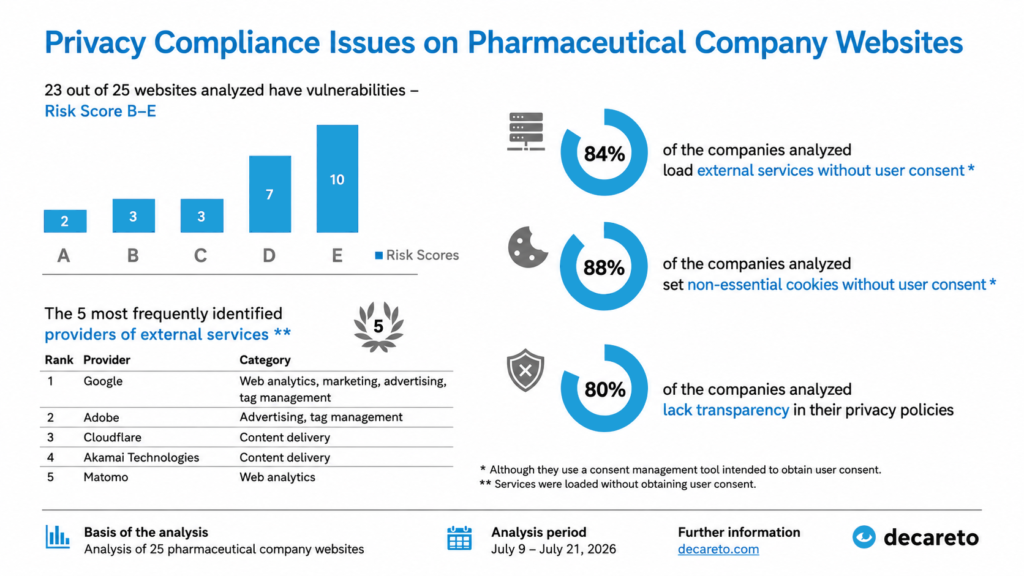
decareto hat die deutschen Websites von 25 Pharmaunternehmen automatisiert auf DSGVO- und TDDDG-Konformität untersucht. Das Ergebnis: Alle Unternehmen setzen Consent-Banner ein — dennoch weisen die meisten Datenschutzmängel bei Cookie-Konfiguration, externen Diensten und Datenschutzerklärungen auf. Die Analyse deutet darauf hin, dass viele Pharmaunternehmen zentrale Anforderungen der DSGVO und des TDDDG nicht vollständig umsetzen.
2026 Data Protection Check on Banking Websites: 80 per cent found to have data protection issues
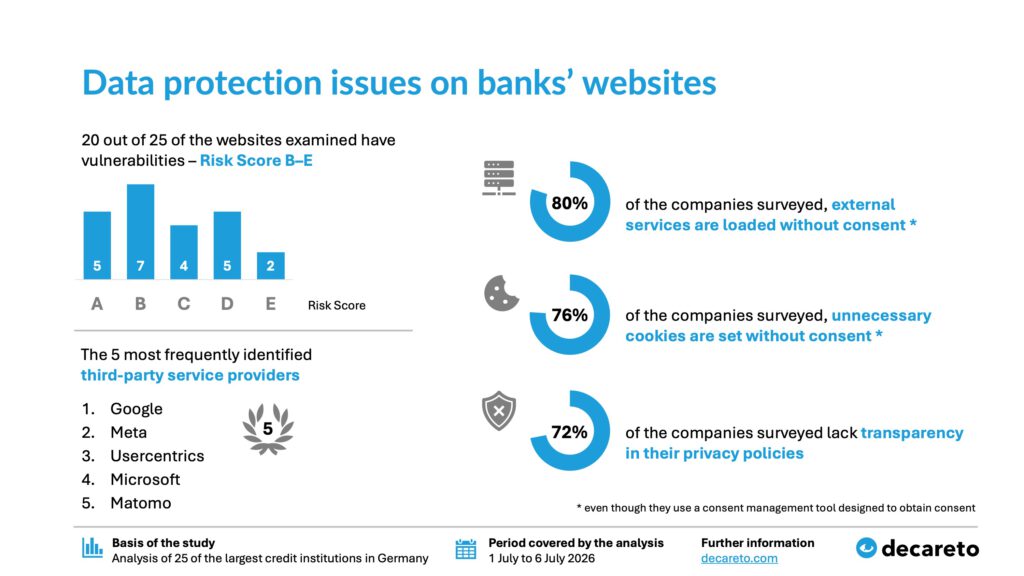
Credit institutions and banks are subject to comprehensive compliance and regulatory requirements. In addition to traditional financial regulations, they must also comply with legal requirements relating to data protection, digital accessibility and the legally compliant operation of their websites.
Privacy policy generator for up-to-date privacy policies in 24 languages

This blogpost shows how a privacy policy generator supports the creation, maintenance and updating of privacy policies using automated website scans and a structured workflow.
Privacy policy generator: create a dynamic privacy policy in 5 steps
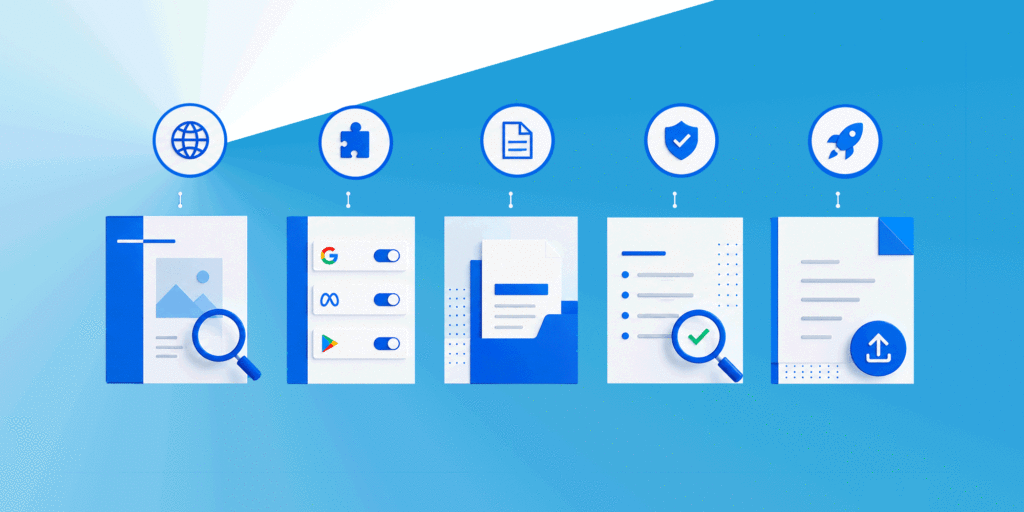
Create, review and update dynamic privacy policies based on website scans – using templates and an approval process.
How to check websites for keyboard accessibility

The most common and most serious accessibility problem that websites have is the lack of keyboard operability – a website must be accessible without a mouse and only with the keyboard. A test by Aktion Mensch shows how widespread this gap is: 71 online stores were examined, but only 15 of them could be operated […]
How to check the transport encryption of a website

Secure transport encryption (TLS) protects data transmission between the browser and the web server and is a fundamental requirement for data protection and IT security. In this article, you will learn how to check your website’s transport encryption using free tools, identify typical vulnerabilities and address potential security risks at an early stage.